
The catalysts for new business
UKRI’s large-scale national facilities are some of the most advanced in the world. Their pioneering capabilities are driving innovation and economic impact with the creation of spin-out companies.
From studying an unknown virus to understanding the impact of gunfire on heritage sites, creating perfect ice cream to improving airport security, UKRI’s large-scale national facilities enable research that touches every aspect of our lives.
ISIS Neutron and Muon Source (ISIS), the Central Laser Facility (CLF) and Diamond Light Source (Diamond) are the most powerful ‘microscopes’ of the 21st century, imaging and pulsing matter to obtain unique insights.

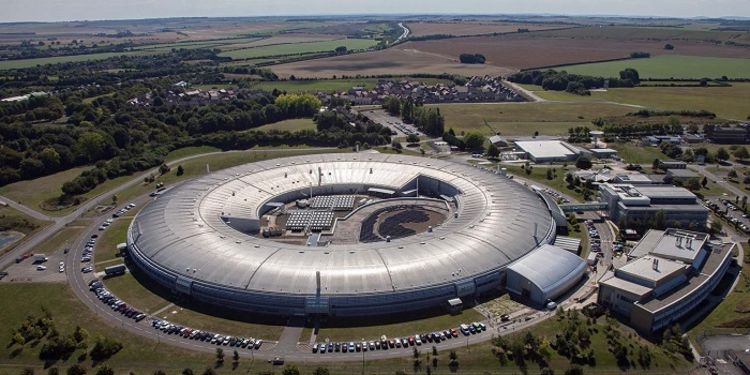
Diamond Light Source is the UK’s national synchrotron. It works like a giant microscope, harnessing the power of electrons to produce bright light that scientists can use to study anything from fossils to jet engines, viruses to vaccines. Credit: Diamond Light Source
Diamond Light Source is the UK’s national synchrotron. It works like a giant microscope, harnessing the power of electrons to produce bright light that scientists can use to study anything from fossils to jet engines, viruses to vaccines. Credit: Diamond Light Source
Research supported by these cutting-edge centres delivers economic and societal benefits in areas including the environment, renewable energy and healthcare. Alongside their unique research facilities (techniques such as these can only be provided by large central facilities), the technologies these three centres have developed have also led to the creation of a number of successful spin-out companies.
Cobalt Light Systems, for example, harnessed a method invented at the CLF for identifying the chemical composition of matter underneath surfaces. The technology can be used to identify things beneath the skin or liquids in bottles, and has been developed into devices with security applications, such as identifying hazardous materials like explosives or narcotics.
ISIS helped INEOS ChlorVinyls, Europe’s largest manufacturer of chemicals, to eliminate undesirable by-products from its manufacturing process, which led to improvements in widely used materials, such as PVC. And by predicting the durability of welds, EDF Energy saved £3bn by extending the life of fifteen nuclear reactors by five years.
Diamond has contributed to a diverse range of business solutions, collaborating with Unilever and the University of Manchester to understand how the subtle balance of ice crystals and air bubbles can be tweaked to produce more delicious ice cream, and with Rolls-Royce to examine advanced engineering materials that will improve the durability of aircraft engines.
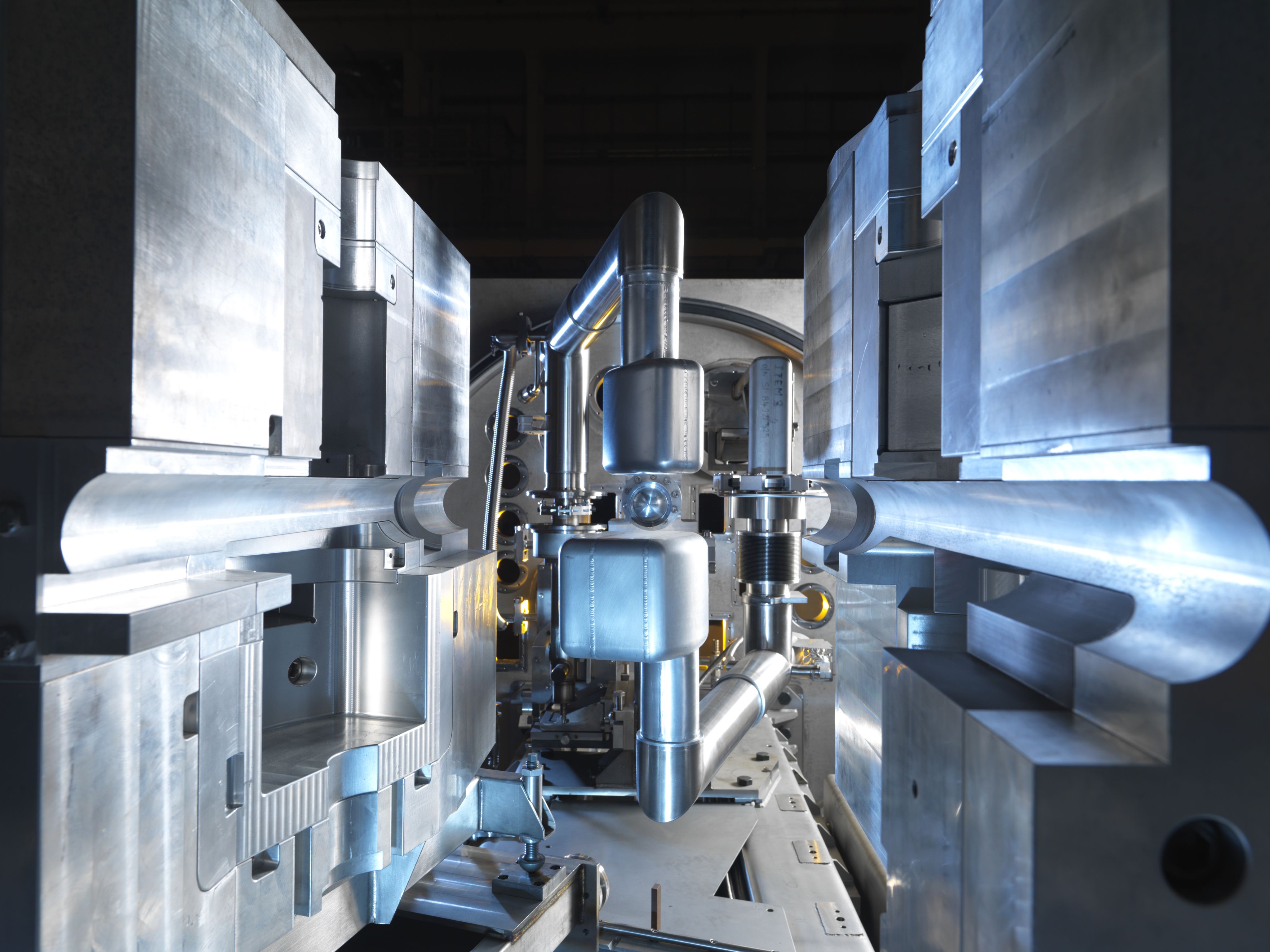
Image: Cross section of an area of ISIS. ISIS Neutron and Muon Source produces beams of neutrons and muons that allow scientists to study materials at the atomic level using a suite of instruments, often described as ‘super-microscopes’. Credit: Andrew Brookes AB Still LTD

 Built with Shorthand