
Oral vaccination approaches for farmed salmon
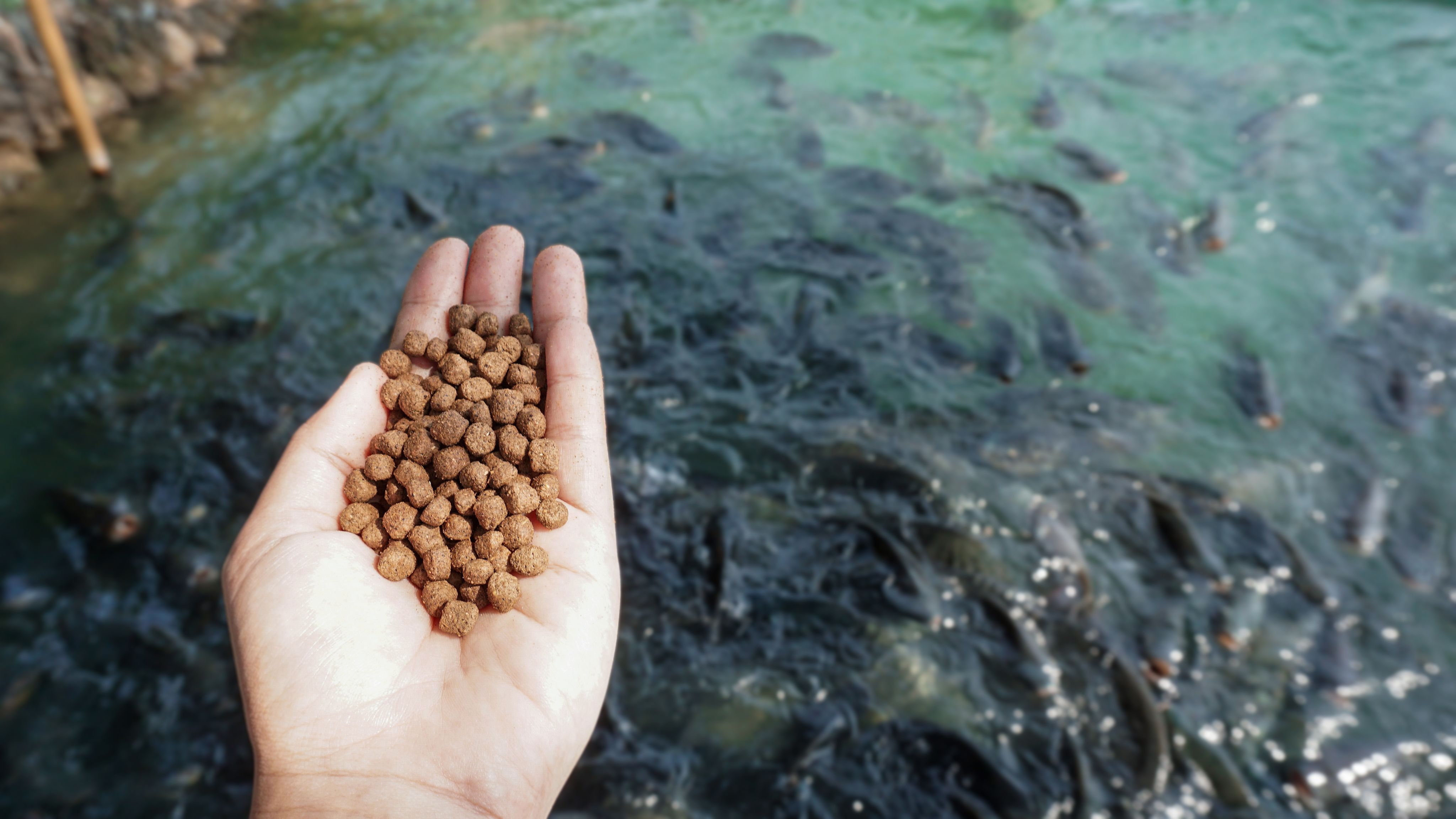
Vaccinated farmed salmon decreases the occurrence of bacterial diseases and reduces antibiotic use. The current approach is by injection, which can be labour-intensive and stressful for fish, making them more susceptible to other diseases, and can also induce side effects. Oral vaccines that can be mixed into feed could be a cost-effective alternative.
Research led by Professor Chris Secombes, supported by the Animal Health Research Club, developed and tested the use of silicon nanoparticles for vaccine delivery, developing a novel oral vaccination method for salmon. The research team investigated how the salmon immune system reacts to foreign molecules in the gut, identified signatures of a protective immune response from pre-existing commercial vaccines, and evaluated the novel silicon nanoparticle delivery method. The research was carried out at the Universities of Aberdeen, Stirling and Queen’s University Belfast.
For the latter, two vaccines were studied (furunculosis and salmonid alphavirus.) The studies showed, for the first time, that the novel method was safe for fish and proved that nanoparticles can be effectively loaded with bacterial and viral antigens. These results will aid future oral vaccine development for fish diseases and have opened a new avenue for vaccine production.

 Built with Shorthand