

Engineering a green future: Professor Anne Osbourn
Plants have been used by humans for thousands of years as a source of medicines and other high-value products. Most of these molecules are too complex to be synthesised using chemistry, at least at commercial scale. The explosion in plant genome sequence data, plus powerful and rapid transient plant expression technology, is now enabling the chemical engineering capability of the plant kingdom. This is being harnessed and deployed for the production of known and new-to-nature chemicals tailored for food, health and industrial applications.
The research of Professor Anne Osbourn OBE, a group leader at the John Innes Centre and previously Co-Director of the BBSRC and EPSRC co-funded OpenPlant Synthetic Biology Research Centre, has significantly contributed towards these developments. Professor Osbourn also acted as a co-Investigator on two BBSRC Networks in Industrial Biotechnology and Bioenergy (NIBB). Most recently, she received a BBSRC Engineering Biology Mission award to optimise plant production of medically and agriculturally important compounds, called triterpenoids.
Her research into the production of an oat triterpenoid found that genes involved in triterpenoid synthesis were clustered together in the genome, something that is rare in plants. This has paved the way for the discovery of new and important plant products using computational methods, including vaccine adjuvants and anti-cancer drug candidates.

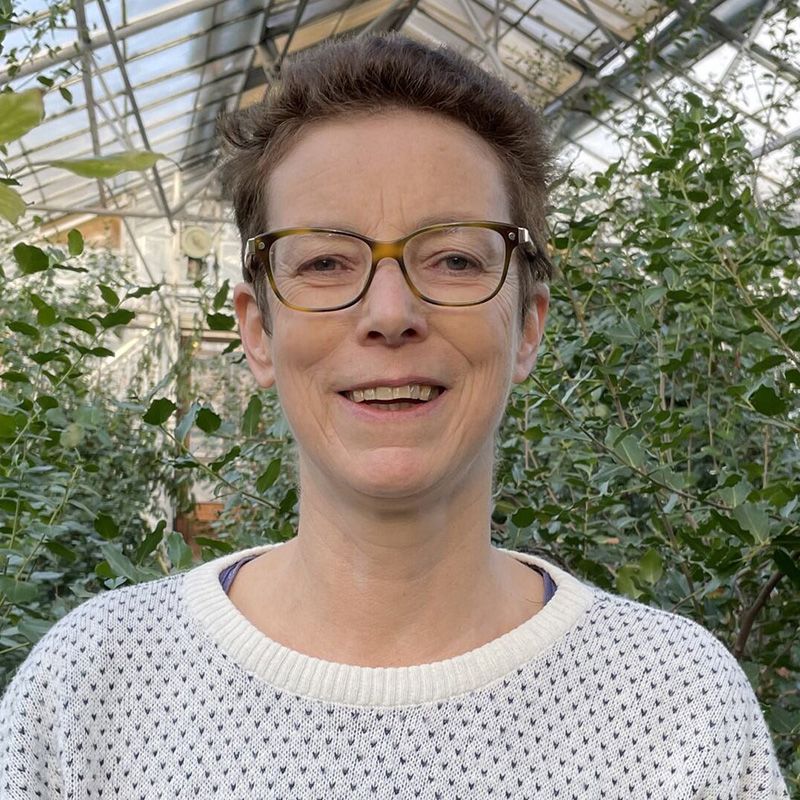
Professor Anne Osbourn, group leader at the John Innes Centre Credit Dr Laetitia Martin, John Innes Centre
Professor Anne Osbourn, group leader at the John Innes Centre Credit Dr Laetitia Martin, John Innes Centre
About BBSRC
As the UK’s major public funder of world-leading bioscience research and innovation, the Biotechnology and Biological Sciences Research Council's (BBSRC) vision is to advance the frontiers of biology and drive towards a healthy, prosperous and sustainable future.
Some of the institutions key to meeting this vision are BBSRC’s strategic partnerships with universities, of which there are 15. Also mission critical are the 8 specialist bioscience research institutes that BBSRC strategically funds:
- Babraham Institute
- Earlham Institute
- Institute of Biological, Environmental and Rural Sciences (IBERS)
- John Innes Centre
- The Pirbright Institute
- Quadram Institute
- The Roslin Institute
- Rothamsted Research
Find out more about BBSRC’s work and strategic priorities by reading our Strategic Delivery Plan 2022-2025.
Contact us
Impact narratives and case studies provide an important evidence base to support the case for continued investment in world-class bioscience.
Get in touch with us to discuss BBSRC’s research outcomes and impacts or to tell us about your own:
Emma Lambourne, Senior Manager, Impact Evidence
emma.lambourne@bbsrc.ukri.org
Rosie Ford, Manager, Impact Evidence
rosie.ford@bbsrc.ukri.org
Dr Beverley Thomas, Associate Director, Evidence and Evaluation
beverley.thomas@bbsrc.ukri.org


Biotechnology and Biological Sciences Research Council
UK Research and Innovation, Polaris House, Swindon, SN2 1FL
 Built with Shorthand