
Molten material thermal & spectral (thermo-chem) non-contact sensing technologies
Technology specialists and a university have come together to demonstrate non-contact technology for measuring temperature and chemical composition for foundation industry materials.


Molten material thermal & spectral (thermo-chem) non-contact sensing technologies
Technology specialists and a university have come together to demonstrate non-contact technology for measuring temperature and chemical composition for foundation industry materials.
Using molten materials in the steel and glass industries is an energy-intensive necessity but brings logistical challenges regarding effective monitoring and resource use.
When it comes to assessing chemical composition and impurities and measuring emissivity and temperature control, current testing methods include ladle sampling and using a thermal camera – which have a degree of inaccuracy with current technology options. A system that can undertake these tasks with greater speed, accuracy and efficiency will significantly improve productivity, energy use and resource requirements.
Pyroptik Instruments Ltd, with the support of the University of Sheffield and backed by the Transforming Foundation Industries (TFI) challenge, have created a highly accurate, non-contact monitoring and analysis tool aimed at improving the measurement and control of temperatures and the impurities generated in molten iron and glass production.
"With the high cost of chemicals required to remove impurities from steel production, there is a real benefit to a solution that more accurately measures the chemical composition and, therefore, the volume of chemicals required," says Iain Scott, Director of Pyroptik. "Using improved thermal imaging technology, non-contact measurement offers a more accurate way of assessing the chemistry within liquid iron and molten glass, meaning only necessary chemicals need to be used – while temperature regulation can also be improved to save unnecessary energy use."
The project aimed to demonstrate the effectiveness of the technology through melting samples and determining an optimum measurement and data collection technique. "This would allow us to apply the technology in the best way and prove the benefits of the concept," adds Scott. "From there, the advantages of temperature control - and therefore energy use - and being able to assess and remove impurities more efficiently would provide a great deal of financial and productivity benefits."


"Effective data and technology use means more optimised temperature and resource controls, creating productivity benefits, energy savings and reduced impurities."


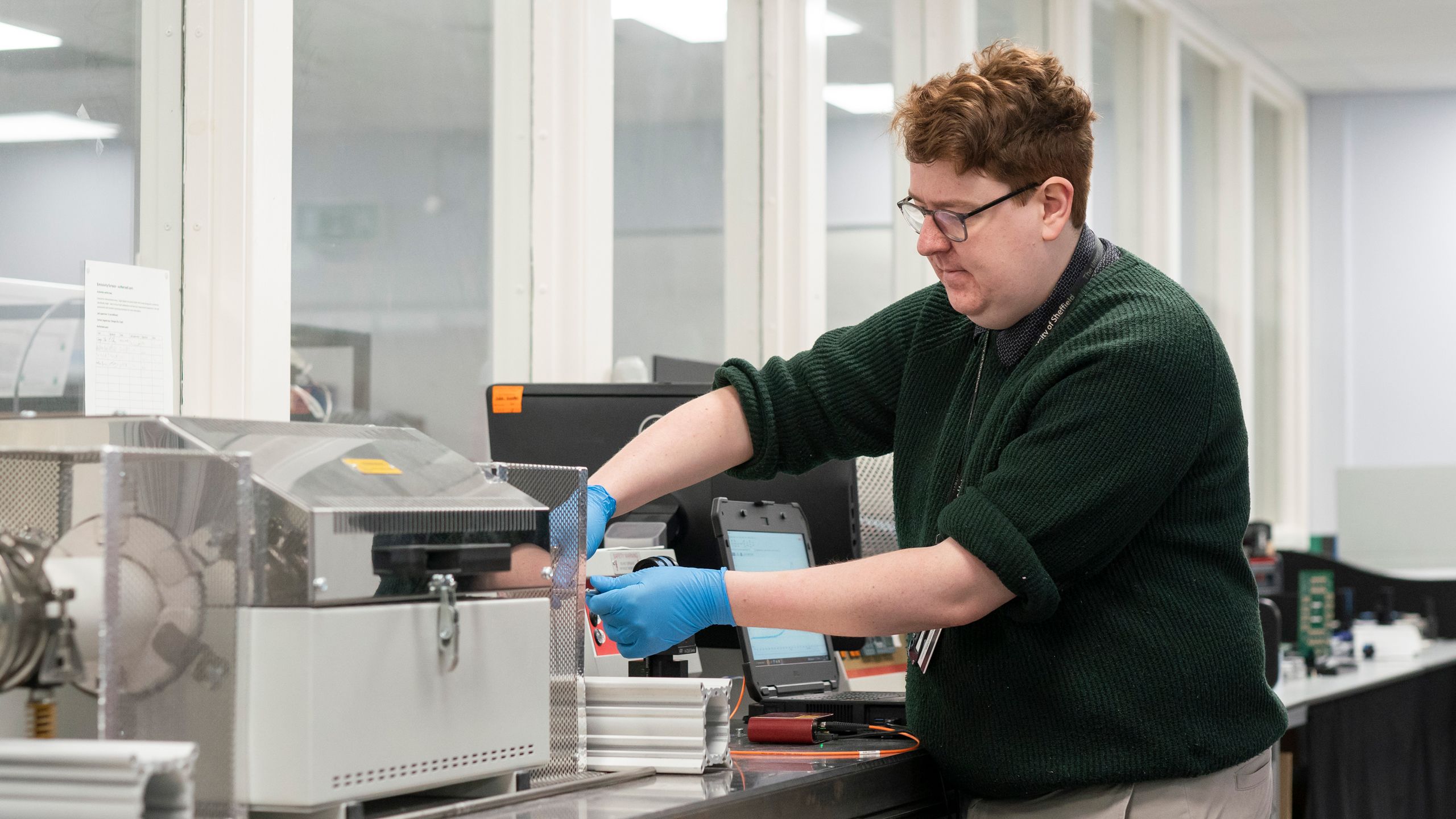
In terms of results, the project demonstrated the possibility for real-time data to be produced and for the accuracy of thermal imaging testing to be improved from a 2% error margin to just 0.25% using the innovative camera and mirror-focused system. The technology's ability to allow users to avoid awkward sampling methods for assessing heat and chemical composition, as well as allowing data to be gathered from pouring and moving molten materials, are also valuable benefits.
Scott comments: "On top of the error accuracy that we can secure, we aimed to showcase solutions that aren't available but that this technology solves. Being able to capture data and measure emissivity, temperature and chemical composition from a pouring molten liquid without any intervention or need to stop the process is potentially a game-changing solution for heavy industry.
"The proof of concept now means we can move to the next stage of a controlled industrial environment, where other impurities and practicality restrictions need to be accounted for," Scott adds. "Following support from the steel industry with sampling, we can now speak to potential customers for on-site testing and implementation – which will also extend to the glass industry where the concept is just as effective."
The project partners will now pursue further funding opportunities or seek investors. With the aim to now move to commercialise the technology and concepts over the next two years, the partners are also looking to connect with international partners to expand the project's reach.


In terms of results, the project demonstrated the possibility for real-time data to be produced and for the accuracy of thermal imaging testing to be improved from a 2% error margin to just 0.25% using the innovative camera and mirror-focused system. The technology's ability to allow users to avoid awkward sampling methods for assessing heat and chemical composition, as well as allowing data to be gathered from pouring and moving molten materials, are also valuable benefits.
Scott comments: "On top of the error accuracy that we can secure, we aimed to showcase solutions that aren't available but that this technology solves. Being able to capture data and measure emissivity, temperature and chemical composition from a pouring molten liquid without any intervention or need to stop the process is potentially a game-changing solution for heavy industry.
"The proof of concept now means we can move to the next stage of a controlled industrial environment, where other impurities and practicality restrictions need to be accounted for," Scott adds. "Following support from the steel industry with sampling, we can now speak to potential customers for on-site testing and implementation – which will also extend to the glass industry where the concept is just as effective."
The project partners will now pursue further funding opportunities or seek investors. With the aim to now move to commercialise the technology and concepts over the next two years, the partners are also looking to connect with international partners to expand the project's reach.


 Built with Shorthand