
The pathway to domestic heat decarbonisation
A scalable manufacturing blueprint for ceramic-based thermal storage cores


The pathway to domestic heat decarbonisation
A scalable manufacturing blueprint for ceramic-based thermal storage cores
The development of innovative heat battery technology is enabling the use of the cheapest and greenest electricity for heating homes, while supporting the needs of an ultra-low carbon electricity grid.
Household heating poses a huge challenge to the UK in meeting its net-zero targets. 97% of homes with central heating use either gas boilers or oil, accounting for around 20% of the nation’s carbon footprint. While heat pumps offer a low-carbon alternative to fossil fuel boilers, they are unsuitable for a substantial number of dwellings, including many flats and terraced housing.
Innovative SME tepeo is addressing the problem with the development of its zero emissions boiler (ZEB). The ZEB is powered by electricity and works like a battery to store energy as heat until needed. The product is good for customers, the environment and the grid, says tepeo’s Engineering Director, Chris Carver.
“Unlike heat pumps, the ZEB doesn’t require outside space and can connect to existing heating systems without the expense of changing pipes and radiators. It can reduce bills as it intelligently charges during periods when electricity is cheapest and greenest,” he explains. “This flexibility in charging times also helps balance the electricity grid by taking energy when there’s an excess, which is an increasing challenge as more and more renewable generation comes online.”
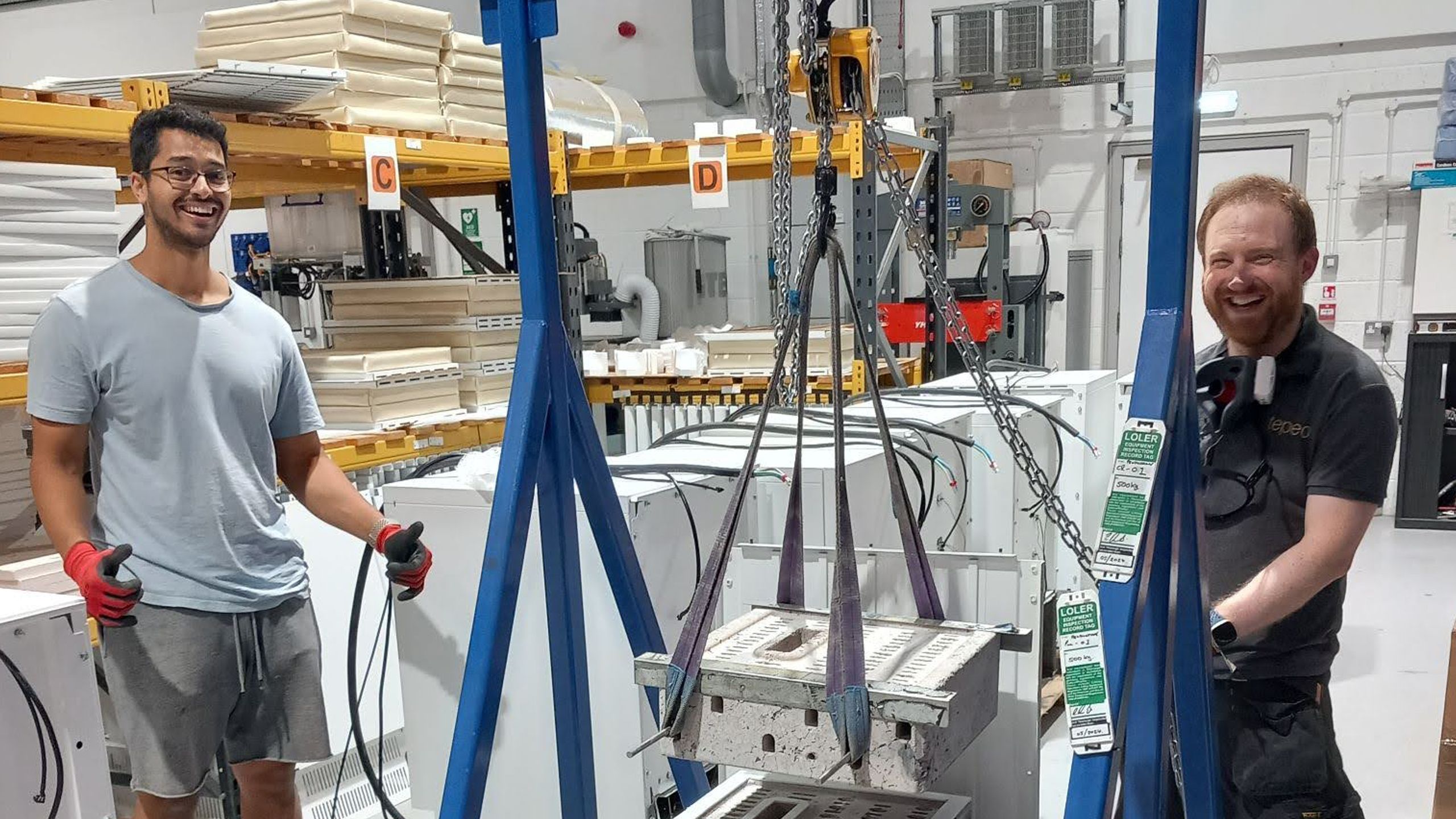
Introduced to the market in 2021, the ZEB’s patented, ultra-high-density thermal storage technology sits at the heart of the product. Electric elements heat a ceramic core up to 800°C, storing a lot of energy in a small footprint. Heat-management technology then releases heat to radiators, underfloor heating and water cylinders on demand.
Manufacturing of this novel technology is currently time-consuming and labour-intensive. So, with funding from the Transforming Foundation Industries Investor Partner Programme, tepeo explored how production could be scaled and unit costs reduced.
“The ceramic core has a lot of thermodynamic interactions which enables the storage of energy at high temperatures and the use of air to manage the exchange of heat into the heating system. It means casting of the core is very intricate and complex,” explains Lead Engineer Dejan Basu. “There are a lot of manual interventions in our current manufacturing process. For example, it takes an hour to clean the individual parts of the mould. So, to scale production, we needed to look at every element from the design of the core and materials used, to new automated manufacturing methods.”

“Unlike heat pumps, the ZEB doesn’t require outside space and can connect to existing heating systems without the expense of changing pipes and radiators. It can reduce bills as it intelligently charges during periods when electricity is cheapest and greenest.”

The project team redesigned the core to create a new modular system that was not only more suited to mass production but also increased the company’s product offering. “We demonstrated that in our current manufacturing setup, we could increase production from two to three cores a day to around 40, with potential for hundreds or thousands in a bigger manufacturing plant,” says Basu. “The modular core approach means the ZEB can be made bigger or smaller to adapt to different sized homes, too.”
The project optimised the performance of the ZEB by developing patent-pending technology used to determine the state of charge in the heat battery. Integrating this into the ZEB algorithms enables charging at the greenest and most economical times – taking into account weather forecasts, customer usage patterns and tariffs – and is now rolled out to existing customers.
Every ZEB is connected to a serverless infrastructure, so the operation of individual units can be aggregated into a ‘fleet’ to create a virtual power plant. The technology monitors grid frequency and can respond to drops in power by asking the fleet to pause charging. This flexibility in demand-side management is of interest to energy suppliers, and the company has successfully completed trials with UKPN and Ovo to demonstrate how the technology might be utilised.
Crucially, the project has helped drive the narrative around heat batteries, says Carver. “Historically, policy has focussed on energy efficiency to reduce demand for fossil fuels. However, as more renewable energy enters the grid, it’s not so much about how much energy is used as when – the challenges are around creating flexibility to use and store energy when it’s available,” he explains. “The policy framework urgently needs to catch up and reflect the value of flexibility in products like the ZEB, which can substantially reduce carbon emissions in home heating and support grid infrastructure changes – and, critically, allow more people to participate in the transition to net zero.”

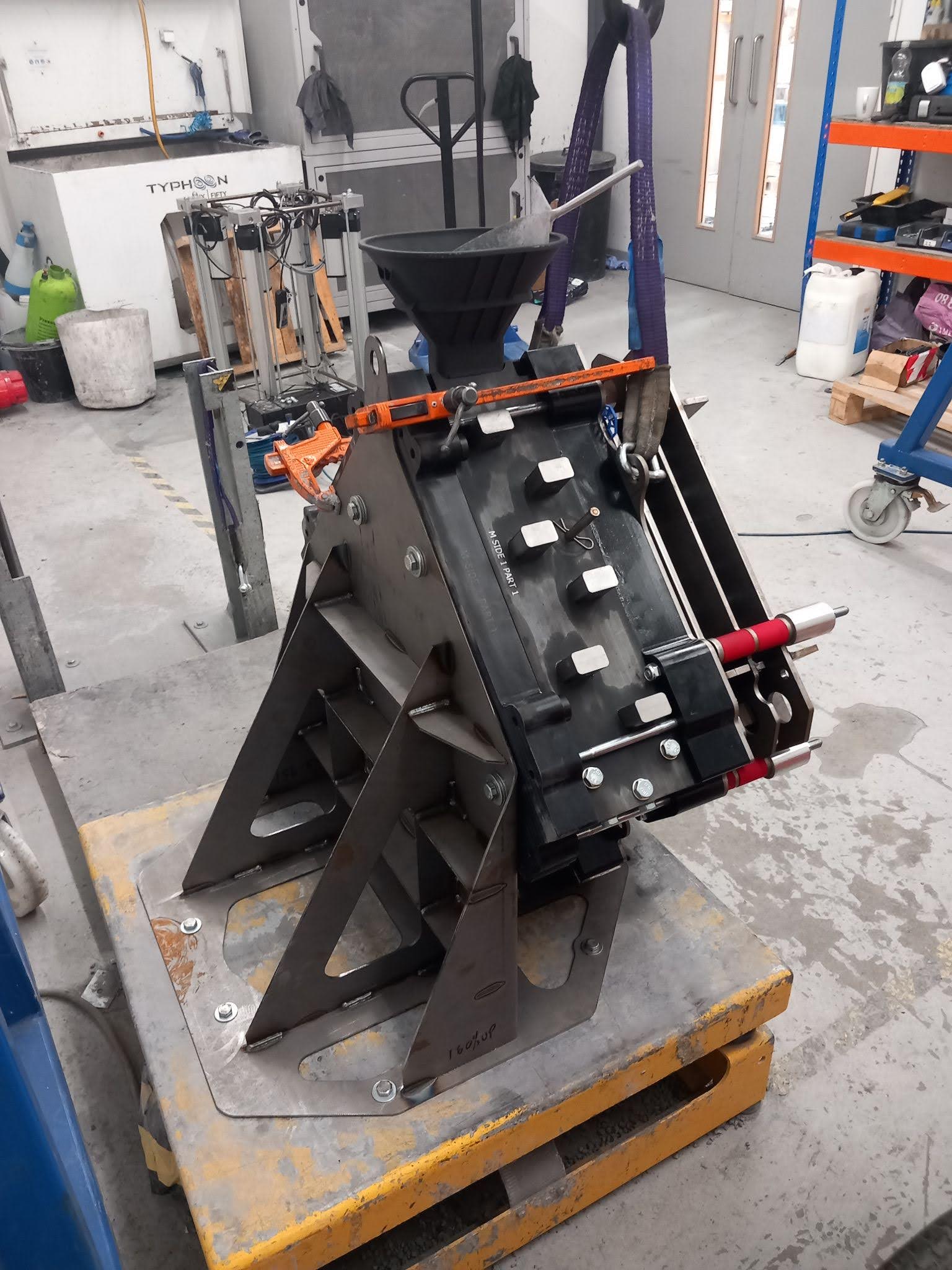


The project team redesigned the core to create a new modular system that was not only more suited to mass production but also increased the company’s product offering. “We demonstrated that in our current manufacturing setup, we could increase production from two to three cores a day to around 40, with potential for hundreds or thousands in a bigger manufacturing plant,” says Basu. “The modular core approach means the ZEB can be made bigger or smaller to adapt to different sized homes, too.”
The project optimised the performance of the ZEB by developing patent-pending technology used to determine the state of charge in the heat battery. Integrating this into the ZEB algorithms enables charging at the greenest and most economical times – taking into account weather forecasts, customer usage patterns and tariffs – and is now rolled out to existing customers.
Every ZEB is connected to a serverless infrastructure, so the operation of individual units can be aggregated into a ‘fleet’ to create a virtual power plant. The technology monitors grid frequency and can respond to drops in power by asking the fleet to pause charging. This flexibility in demand-side management is of interest to energy suppliers, and the company has successfully completed trials with UKPN and Ovo to demonstrate how the technology might be utilised.
Crucially, the project has helped drive the narrative around heat batteries, says Carver. “Historically, policy has focussed on energy efficiency to reduce demand for fossil fuels. However, as more renewable energy enters the grid, it’s not so much about how much energy is used as when – the challenges are around creating flexibility to use and store energy when it’s available,” he explains. “The policy framework urgently needs to catch up and reflect the value of flexibility in products like the ZEB, which can substantially reduce carbon emissions in home heating and support grid infrastructure changes – and, critically, allow more people to participate in the transition to net zero.”


 Built with Shorthand